I design for hypersonic flight, automate industrial systems, and pursue research — because building something the right way means understanding it first.
Currently finishing an aerospace master's at the Technical University of Munich while designing for a hypersonic start-up. Behind that: years of research at TUM's Institute of Automation and Information Systems, three IEEE publications, one of them a first-authored, award-winning paper from an independent stint at the University of Michigan. The aerodynamics came first, with early exposure through special highschool programs on flow simulation. The research rigor followed. Now both are converging.
Experiences, Projects & Hobbies Turned Projects
Hypersonic Vehicle Aerodynamics & Aero-Thermal Simulation
Sept 2025 – presentHypersonica — European Hypersonic Defence Startup
Aerodynamic intern at a fast-moving defence startup designing hypersonic vehicles. Owned control fin design end-to-end — developed an intuition for how geometry drives aerodynamic behavior at hypersonic speeds, then applied first principles and deliberate reasoning through targeted parameter studies to converge on an optimized design. Built automated aerodatabase generation toolchains around low-fidelity tools, producing aerodynamic coefficients for more than 5 million flight points within minutes. Separately, wrote custom C code for aero-thermal coupling in conjugate heat transfer simulations, meshed complex vehicle geometries, and validated CFD setups against literature-sourced experimental data. Upcoming Master's Thesis on RANS wall functions for hypersonic heat flux prediction.
Independent Research & First-Authored IEEE Conference Paper
May – Nov 2024University of Michigan — Barton Research Group
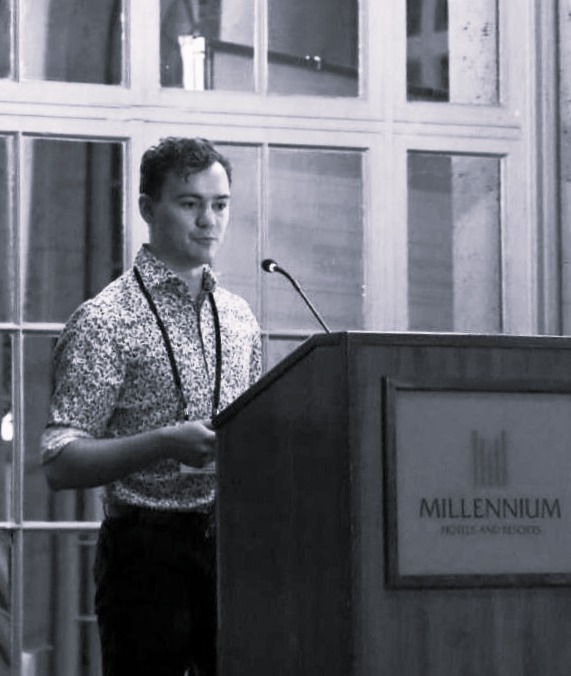
Visiting scholar in one of the world's leading robotics and manufacturing research groups. Investigated how Digital Twins can be standardized, shared, and composed across partners in complex industrial value chains. Synthesized leading international frameworks into a novel, generalizable proposal evaluated on a smart manufacturing testbed. First-authored the resulting conference paper from research-gap identification to submission — presented at IEEE CASE and awarded as a finalist for the Best Application Paper.
Requirement-driven Sharing of Manufacturing Digital Twins Along the Value Chain
Key Learnings
- End-to-end ownership of an independent research contribution — from gap identification through concept development to first-authored, award winning, IEEE conference paper
- International collaboration across two institutions, research cultures, and continents
- Synthesizing fragmented, cross-disciplinary literature into a coherent and novel contribution
Academic Research & Peer-Reviewed Publications
Oct 2021 – July 2025Technical University of Munich — Institute of Automation and Information Systems
Research assistant at one of Germany's leading automation institutes, working at the intersection of software engineering and industrial production systems. Investigated quality patterns and evolution of industrial PLC control software — translating empirical findings and identified patterns into publishable scientific frameworks. Co-authored two peer-reviewed IEEE publications and contributed to a book chapter. Served as a direct consultant to industrial partners, introducing research-backed tools and methodologies.
Metric-based Identification of Target Conflicts in the Development of Industrial Automation Software Libraries Change Categories Based on Mutable Artifacts in PLC Control Software Projects Wie gut ist meine Automationssoftware? Use Cases fuer den industriellen Einsatz von Softwarequalitaetsmetriken
Key Learnings
- Formalization of empirically recognized patterns into rigorous, publishable scientific contributions
- Full academic research cycle: literature review, hypothesis formation, industrial evaluation, peer-reviewed IEEE publication
- Bridging research and industry — translating academic findings into actionable tools for production partners
Composite Pressure Vessel Development & Systems Engineering
Nov 2023 – Sept 2025Technical University of Munich — Student Rocketry Team "WARR"
Contributing to the development of a Type 5 carbon fiber pressure vessel within one of Europe's most established student rocketry teams. Owned the high-pressure burst testing pipeline end-to-end — from safety concept and custom strain/pressure measurement electronics to final execution. Designed an automated sealant distribution system using stepper-motor-driven mechanics and custom 3D-printed fixtures. In parallel, contributed systems engineering efforts across subteams via SysML interface and requirements modeling.
Key Learnings
- High-tempo, break-things-and-iterate rocketry — moving fast without cutting corners on safety
- End-to-end ownership of safety-critical test campaigns, from concept through custom instrumentation to execution
- Formal rocketry procedures: CDRs, safety reviews, and the discipline they demand
Multi-Regime Rocket Fin Load Analysis Tool
May – Nov 2024University of Michigan Student Rocketry Team "MASA"
MATLAB GUI that estimates subsonic, transonic, and supersonic aerodynamic loads on rocket fin geometries across a full flight profile — regime-by-regime computation with Mach cone overlays on the fin planform. Built on analytical methods from Bonney's Engineering Supersonic Aerodynamics, Liu's Aerodynamics, Stanford AA200b, and NASA technical reports. What started as a team contribution became a self-taught deep dive into compressible flow theory.
Holistic Automation Concept for Industrial Heat Treatment
2019End-of-Highschool Capstone — Industry Collaboration
Designed a full-scope robotic automation concept for an industrial gas nitriding oven — from workpiece analysis and FE simulation through circle packing algorithm development (beating out WolframAlpha) to robotic cell layout and cycle time validation. Commissioned by a leading Austrian heat treatment company — first experience delivering a complete engineering concept for a real industrial client.
Home Automation System
~2018Custom home automation stack using ESP8266 microcontrollers, a Raspberry Pi MQTT broker, and voice assistant integration with Alexa and Google Home. Full hardware lifecycle from breadboard prototyping to final soldered through-hole PCBs — entirely self-built, before AI coding tools existed.
Microcontroller Explorations
OngoingCollection of personal projects on ESP32, NodeMCU, and Arduino platforms — programmable LED arrays, OLED displays, automated plant watering, and radar-based presence detection. Each a self-contained exercise in embedded problem-solving.
Pre-University Science & Engineering Programs
2016 – 2018Johannes Kepler University Linz & Verein Talente OÖ
Selected during highschool for competitive gifted-student programs hosted at Johannes Kepler University — chip design in the Invent a Chip workshop, the JKU Young Scientists engineering track, and two editions of the Applied Mathematics Project Week (2017, 2018). Both years, out of six available topics, the pick was on flow simulations. The fascination with moving fluids started early.
Technical High School Engineering Projects, Laboratories & Workshops
2014 – 2019Five years of project-based technical education that combined theory with hands-on practice from day one — PLC programming, electrical schematics, CAD/FEM, and industrial robotics in the classroom; turning, CNC milling, welding, and soldering in the workshop. A head start that most engineering students only begin to build at university.
Road Bike Building & Restoration
Since 2016Sourced parts and assembled a complete carbon fiber road bike from the frame up. Separately restored a vintage steel frameset with modern brifters and drivetrain. Foundation for ongoing bicycle maintenance and repair work.
Education
M.Sc. Aerospace — Technical University of Munich
Provisional GPA 3.4/4.0 (1.9 German scale) | Aeroelasticity, Applied CFD, Boundary-Layer Theory, Turbulent Flows, Aerospace Structures, Flight Propulsion & Gas Turbines, Space Resources, Thermofluid Simulation, Materials for Jet Engines, Rocket Propulsion, Gasdynamics
B.Sc. Mechanical Engineering — Technical University of Munich
GPA 3.4/4.0 (1.9 German scale, top 11.6%) — Completed in 6 semesters (University avg. 8.1) | Fluid Mechanics, Automatic Control, Heat Transfer, Thermodynamics, Engineering Mechanics, Engineering Materials, Lightweight Structures, Industrial Automation, Autonomous Vehicles, Introduction to Spaceflight, Numerical Methods, Bionics
Technical Highschool for Mechatronics
GPA 3.9/4.0 (1.12 Austrian scale) — Graduated with Distinction "Best Upper Austria" | Focus on industrial automation, electrical engineering, CAD/FEM, and manufacturing processes. Capstone project on hardening oven automation.
Skills & Tools
Programming
Python, MATLAB (incl. Simscape, Simulink, Stateflow), C/C++, VBA, LabVIEW
CAD & FEM
SolidWorks (incl. FEM), Siemens NX, CATIA, Inventor, Altair FEM
CFD
High-Fidelity: OpenFOAM, Ansys Fluent, Ansys CFX · Low-Fidelity: DATCOM, RocketPy · Meshing: ANSA, snappyHexMesh
Embedded & Hardware
ESP8266, ESP32, Arduino, Raspberry Pi, UART, SPI, UDP, TCP, MQTT, PCB Design and Soldering
Automation & Industrial
PLC Programming, Industrial Automation, EPlan, Process Control
Human
German (native), English (fluent) · Civil Service in Early Childhood Education
Publications
Requirement-Driven Sharing of Manufacturing Digital Twins Along the Value Chain
Conference paper.
Selected for Best Application Paper Finalist.
View publicationSharing of Digital Twins for Manufacturing and their Associated Requirements for Integration and Aggregation Along the Value Chain
View repositoryChange Categories Based on Mutable Artifacts in PLC Control Software Projects
Conference paper.
View publicationWie gut ist meine Automationssoftware? Use Cases fuer den industriellen Einsatz von Softwarequalitaetsmetriken
Chapter in the VDI report of the Automation 2024 congress, "AI beats Automation?".
View publicationCombination of Workflow Modelling and Static Code Analysis to Assess the Effect of Changes in Industrial Automation Software for Recertification in the MedTech Domain
View repositoryMetric-based Identification of Target Conflicts in the Development of Industrial Automation Software Libraries
Conference paper.
View publication